
Evaluating Central Air vs Mini Split for the Phoenix West Valley Homes
When we look at central air vs mini split for the Phoenix West Valley homes, we have to start with the environment. In cities like Glendale and Peoria, our HVAC systems don’t just “run”—they battle. With summer temperatures in April 2026 already pushing the limits of mechanical endurance, the choice between a traditional ducted system and a ductless one often comes down to how your home handles the heat and the dust.
Traditional central air has been the standard for decades. It’s a “set it and forget it” solution that uses a large outdoor condenser and an indoor air handler to push cooled air through a network of ducts. For many established neighborhoods in the West Valley, this infrastructure is already in place. However, the desert climate introduces a major enemy to central air: the attic. Most ductwork in Arizona runs through attics that can reach 150°F. If those ducts aren’t perfectly sealed, you aren’t just cooling your home; you’re trying to cool the entire desert.
Mini-splits, on the other hand, are the “special forces” of cooling. They don’t use ducts at all. Instead, an outdoor unit connects directly to one or more indoor air handlers via small refrigerant lines. This design is increasingly popular for Air Conditioning Installation Replacement in the West Valley because it eliminates the “middleman”—the leaky, hot ductwork—and delivers cold air exactly where you need it.
Energy Efficiency and Performance in the Arizona Heat
Efficiency is measured by the SEER (Seasonal Energy Efficiency Ratio) rating. Think of it like MPG for your car. In the West Valley, a high SEER rating is a must. While older central systems might struggle along at a SEER of 10 or 14, modern ductless mini-splits can achieve ratings as high as 30.
The secret to this efficiency is inverter technology. Traditional central AC units are often “all or nothing”—they blast at 100% capacity until the thermostat is satisfied, then shut off. Mini-splits use variable-speed compressors that act more like cruise control, ramping up or down to maintain a steady temperature without the energy-intensive “startup” spikes.
| Feature | Central Air (Standard) | Ductless Mini-Split (Premium) |
|---|---|---|
| SEER Rating | 14 – 22 | 20 – 30+ |
| Delivery Method | Ductwork (often in hot attics) | Direct-to-room (no ducts) |
| Energy Loss | ~30% through duct leaks | 0% (no ducts) |
| Compressor Type | Single or Two-Stage | Variable-Speed Inverter |
Understanding How Does Central Heating And Cooling Work helps illustrate why mini-splits often win the efficiency race. In a ducted system, the air has a long journey from the air handler to your bedroom. In a mini-split, the journey is only a few inches.
Maximizing Efficiency with Central Air vs Mini Split for the Phoenix West Valley Homes
If you choose to stick with central air, maximizing efficiency means obsessing over your ducts. The U.S. Department of Energy notes that up to 30% of conditioned air escapes through leaky ducts before it ever reaches your living space. In a Phoenix July, that’s a lot of wasted money.
However, Mini Split Ductless Units bypass this issue entirely. By placing the cooling source directly in the room, you ensure that 100% of the energy you pay for is actually cooling your family. During peak cooling demand—those brutal afternoons when the sun is baking the west side of your house—a mini-split can maintain comfort using significantly less wattage than a central system trying to overcome attic heat.
Indoor Air Quality and Comfort During Monsoon Season
West Valley residents know that summer isn’t just about heat; it’s about the dust and the monsoons. When a haboob rolls through Goodyear or Surprise, your HVAC system becomes your home’s first line of defense.
Central air systems offer the advantage of whole-home filtration. You can install high-end HEPA filters or UV light systems directly into the ductwork to scrub the air. This is a great solution for general air quality, but it requires the fan to be running constantly to be effective.
Mini-splits handle air quality differently. Each indoor unit has its own filter, usually a washable multi-stage system. Because they clean the air right at the point of use, they are exceptionally good at removing dust in the specific rooms you occupy. For those living in Ductless Ac Goodyear Az or Ductless Ac Litchfield Park Az, this means less dust settling on your furniture and more breathable air in your bedrooms.
Zoning Flexibility: Central Air vs Mini Split for the Phoenix West Valley Homes
One of the biggest “comfort killers” in Arizona is the uneven home temperature. We’ve all been in a house where the kitchen is freezing but the master bedroom is a sauna. This happens because central air usually relies on a single thermostat located in a hallway.
This is where the “battle” of central air vs mini split for the Phoenix West Valley homes is often won by the mini-split. Mini-splits offer true zoning. You can set your home office to 72°F while keeping the guest room at 80°F. No more thermostat battles with family members! This flexibility is why many consider a Mini Split Ductless Best In Peoria Az for homes with varying occupancy or large, sun-drenched windows.
Installation Requirements and Home Aesthetics
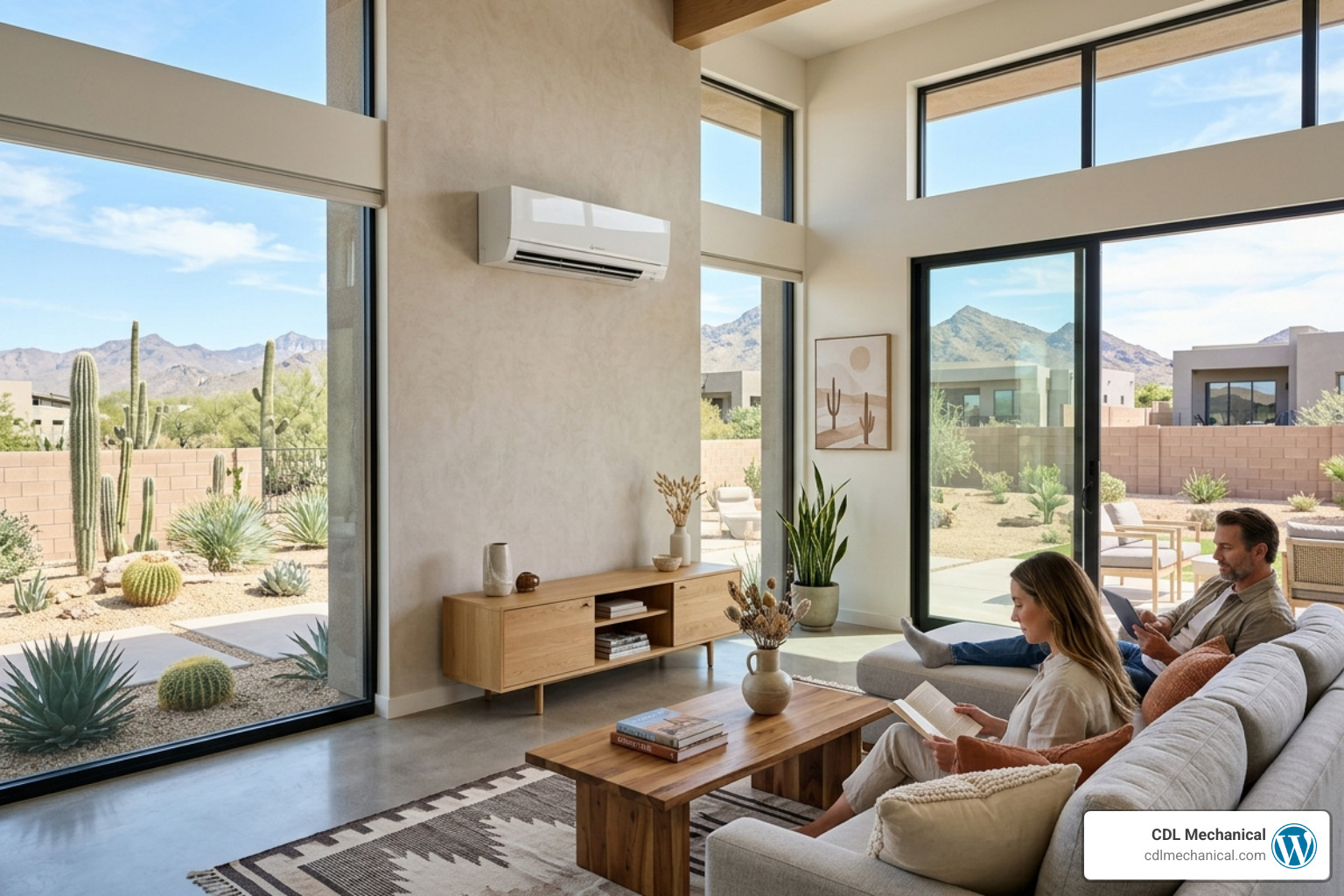
Installation is a major fork in the road. If your home already has a healthy duct system, replacing a central unit is relatively straightforward. But what if you’re renovating a historic home in Glendale or adding a “casita” in Surprise?
Installing new ductwork is invasive, expensive, and requires cutting into ceilings and walls. A mini-split installation is a “retrofitter’s dream.” All that’s required is a small 3-inch hole in the wall to connect the indoor and outdoor components. This preserves the structural integrity of older homes and is much faster to complete.
For aesthetics, central air is the “invisible” winner. You only see small grilles on the ceiling or floor. Mini-splits require a wall-mounted unit (though ceiling cassettes and floor-mounted options exist). Modern units are sleek and whisper-quiet—operating as low as 19 decibels—but they are a visible part of the room’s decor. When seeking Expert Help Your Guide To Every Mini Split Ductless Company In Glendale Az, always ask to see photos of different mounting options to see what fits your style.
If you are in Avondale, checking The Ultimate Checklist For Hiring A Mini Split Ductless Company In Avondale Az can help ensure your installer understands how to place these units for both maximum cooling and the best possible look.
Maintenance, Durability, and Long-Term Value
In the harsh Arizona climate, maintenance isn’t optional—it’s survival. Central air systems typically last 10–15 years in the desert, while mini-splits can often reach 20 years or more with proper care.
Central air maintenance involves checking refrigerant levels, cleaning coils, and—crucially—inspecting and cleaning ducts every few years. Mini-split maintenance is more DIY-friendly for the homeowner; you should clean the reusable filters every 30 to 45 days, especially during dust season.
When it comes to resale value, both systems add worth, but in different ways. A new central system is a “check the box” item for buyers. A multi-zone mini-split is often seen as a premium upgrade, especially in homes where it has solved a notorious “hot room” problem.
Don’t forget the “mild” Arizona winters. Both systems can provide heat, but mini-split heat pumps are incredibly efficient. They move heat rather than creating it, which can be up to three times more efficient than an electric furnace. To find the right fit, consult a Best Mini Split Ductless Guide Avondale Az or read up on Which Mini Split Is Best For Your Phoenix Home.
Frequently Asked Questions about West Valley Cooling
Which system is better for older homes in the West Valley without existing ducts?
Ductless mini-splits are almost always the better choice for older homes or those with “swamp coolers” that never had ductwork. They allow you to add modern, high-efficiency cooling without the massive expense and mess of a major construction project.
Can a mini-split system effectively cool an entire Phoenix home during a 115-degree day?
Absolutely. A properly sized multi-zone system is designed to handle extreme ambient temperatures. The key is the “load calculation”—a professional assessment we perform to ensure the system has enough “muscle” to beat the Arizona sun. Because they don’t lose cooling power in the attic, they often feel “colder” than central air on the hottest days.
How do these systems handle the heavy dust common in Glendale and Surprise?
Both systems can handle the dust, but they require different strategies. Central systems need high-quality pleated filters changed every 1–3 months. Mini-splits use permanent, washable filters that catch dust at the source. Because mini-splits are ductless, you don’t have to worry about dust and allergens building up inside hidden vents over the years.
Conclusion
At CDL Mechanical, we’ve spent years keeping our neighbors in Glendale and the surrounding West Valley cool. We know that every home is unique. Whether you decide that the whole-home reach of central air is right for you or the precision and efficiency of a mini-split is the way to go, we are here to help.
We treat our customers like family, providing honest advice and expert service to ensure your home remains a sanctuary from the desert heat. If you’re still weighing central air vs mini split for the Phoenix West Valley homes, let’s talk. We can evaluate your space and help you choose the system that will keep you comfortable for the next two decades.
Learn more about how central heating and cooling works and see how we can make your West Valley home the coolest spot in the desert.