
Understanding the Inflation Reduction Act Benefits for Arizona Homeowners
The Inflation Reduction Act (IRA) represents the most significant investment in climate and energy security in U.S. history. For those of us living in the Valley, it’s a game-changer. Since its inception, the federal government has funneled billions into clean power and energy efficiency, and Arizona has been a primary beneficiary.
In 2023 alone, over 88,000 Arizona families saved more than $285 million on clean energy and energy efficiency investments. This includes more than $244 million claimed for residential clean energy (like solar) and $40 million for energy-efficient home improvements. These aren’t just abstract numbers; they represent real families in Glendale, Peoria, and Scottsdale lowering their overhead.
The legislation is designed to be a long-term resource. Most of these tax credits are available through 2032, providing a decade-long window to plan your home upgrades. However, with the current 2026 climate, many homeowners are acting now to beat the rising costs of energy. If you are wondering how recent industry shifts affect your choices, check out What You Need To Know About Hvac Changes In 2025/ to see how new refrigerant standards and efficiency requirements tie into these federal benefits.
Tax Credits vs. Rebates: Navigating Arizona’s Financial Incentives
One of the most common questions we get at CDL Mechanical is: “What’s the difference between a tax credit and a rebate?” Understanding this is key to maximizing the inflation reduction act benefits for arizona homeowners.
| Feature | 25C Tax Credit | HEEHRA / HOMES Rebates |
|---|---|---|
| What is it? | A dollar-for-dollar reduction in the taxes you owe. | An upfront discount or “cash back” on the purchase price. |
| Timing | Claimed when you file your annual tax return. | Applied at the point of sale (depending on state rollout). |
| Income Limits | Generally none; available to all homeowners. | Strict limits based on Area Median Income (AMI). |
| Annual Cap | Up to $3,200 total per year (renewable). | Up to $14,000 lifetime per household. |
| Best For | Moderate to high-income households with tax liability. | Low to moderate-income households looking for upfront savings. |
The Energy Efficient Home Improvement Credit (25C) is the bread and butter for most homeowners. It allows you to claim 30% of the cost of qualifying upgrades, up to $1,200 annually for general improvements (like windows and doors) or a separate $2,000 for heat pumps. Because this credit resets every year, you can strategically space out your projects—doing your insulation this year and your HVAC system next year—to maximize your total return.
For a deeper dive into which specific units qualify, read our guide on What Hvac Systems Qualify For Tax Credits And Rebates/.
Qualifying HVAC Systems and Energy-Efficient Upgrades
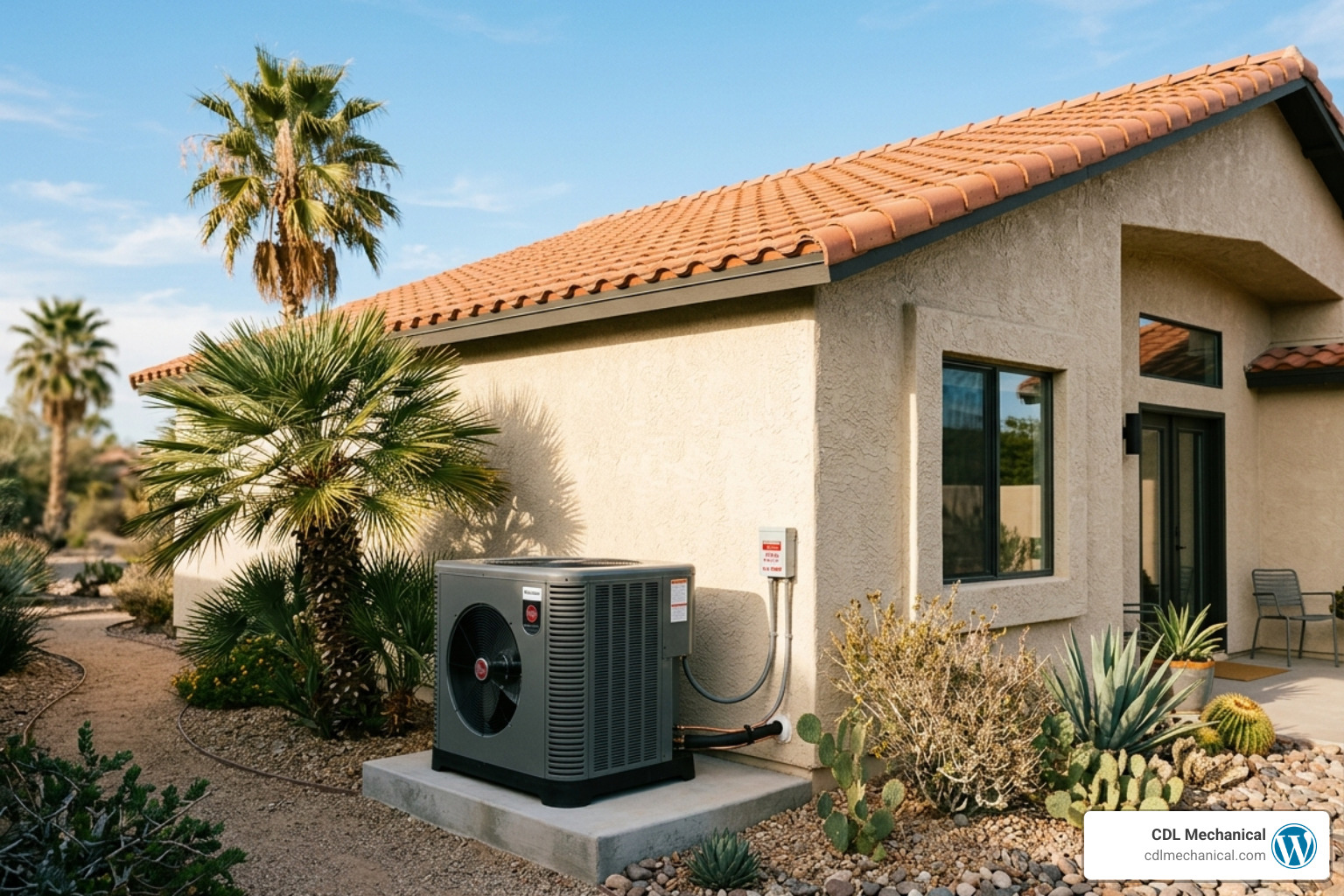
In Arizona, your HVAC system is the heart of your home. It’s also usually the biggest energy consumer. The IRA heavily incentivizes the transition to electric, high-efficiency technology.
The Power of Heat Pumps
The star of the IRA is the electric heat pump. Despite the name, Heat Pumps/ are masters of cooling. They transfer heat out of your home more efficiently than traditional AC units.
- Tax Credit: You can receive a 30% tax credit up to $2,000 for a qualifying heat pump.
- Rebate: Through the HEEHRA program, low-income households can receive up to $8,000 as an upfront rebate.
Understanding Efficiency Ratings
To qualify for these incentives, the equipment must meet specific efficiency “tiers.” This is where Understanding Seer Ratings And Their Importance/ becomes vital. Generally, you’ll be looking for systems with high SEER2 and HSPF2 ratings. In our desert climate, a high SEER2 rating ensures your system isn’t just “running”—it’s running optimally during a 115-degree July afternoon.
Other Eligible Upgrades
The IRA doesn’t stop at the AC unit. You can stack several benefits to reach a total potential savings of $17,000 in the Phoenix-metro area:
- Heat Pump Water Heaters: Eligible for the same $2,000 tax credit as HVAC heat pumps.
- Insulation and Air Sealing: 30% credit up to $1,200 per year. This is crucial in Arizona to keep the “cool” in and the “heat” out.
- Electrical Upgrades: If your new high-efficiency equipment requires a panel upgrade, you may qualify for a credit of up to $600.
- Energy Audits: You can claim a $150 credit for a professional home energy audit. We always recommend this as a first step to identify where your home is leaking money.
Eligibility and How to Claim Your Arizona Energy Incentives
The “Efficiency Arizona” initiative, managed by the Governor’s Office of Resiliency, is the central hub for state-administered rebates. Unlike tax credits, which are open to almost everyone, rebates like the High-Efficiency Electric Home Rebate Program (HEEHRA) are income-dependent.
Eligibility is based on your Area Median Income (AMI):
- Low-income (below 80% AMI): Eligible for 100% of the project cost, up to $14,000.
- Moderate-income (80% to 150% AMI): Eligible for 50% of the project cost, up to $14,000.
- Above 150% AMI: Not eligible for HEEHRA rebates, but still fully eligible for the 25C tax credits.
How to Access Inflation Reduction Act Benefits for Arizona Homeowners
Navigating the paperwork can feel daunting, but it’s manageable if you follow these steps:
- Step 1: Use the Screening Tool. Visit EfficiencyArizona.com to check your AMI status and see which rebates apply to your household.
- Step 2: Get an Audit. Use a professional to perform a home energy audit. This provides the documentation often required for the “HOMES” program, which rewards whole-home energy reduction.
- Step 3: Choose a Qualified Contractor. For rebates, you often need to work with a state-registered contractor who can process the point-of-sale discount.
- Step 4: Keep Your Receipts. For tax credits, you will use IRS Form 5695 when filing your taxes. You’ll need the manufacturer’s certification statement for the specific model installed.
- Step 5: Consult a Pro. While we know HVAC, we aren’t tax accountants. Always verify your tax liability with a professional to ensure you can fully utilize the credits.
Stacking Local Utility Rebates with Inflation Reduction Act Benefits for Arizona Homeowners
One of the best “hacks” for inflation reduction act benefits for arizona homeowners is “stacking.” You aren’t limited to just federal money. Many local utilities in our service areas offer their own incentives:
- SRP (Salt River Project): SRP customers can often find rebates up to $1,125 on new energy-efficient AC systems, plus additional incentives for duct repair ($400) and smart thermostats.
- APS (Arizona Public Service): APS typically offers a $200 rebate for replacing an old unit with a high-efficiency model (SEER2 14.3 or higher).
By combining an SRP rebate with a federal tax credit and a state rebate, the net cost of a premium, high-efficiency system can drop significantly. Just remember that the total rebate cap per household via the state program is $14,000.
Long-Term Value of High-Efficiency Home Improvements
While the initial savings are great, the real “win” for Arizona homeowners is the long-term impact. Making these upgrades is an investment in your home’s future and your family’s comfort.
- Lower Utility Bills: The average new homeowner in Arizona could save 18.1% on their utility bills, or roughly $446 annually, just by moving to modern energy codes and efficient systems.
- Increased Home Value: Energy-efficient homes are increasingly desirable. In a competitive market like Phoenix or Scottsdale, having a certified high-efficiency HVAC system and solar readiness is a major selling point.
- Environmental Impact: These upgrades help reduce greenhouse gas emissions by at least 20% per household. On a larger scale, the clean energy transition is projected to result in 100,000 fewer asthma attacks nationwide by 2030 due to better air quality.
- Climate Resilience: As Arizona summers continue to break records, having a system that can maintain a consistent 75 degrees without breaking the bank isn’t just a luxury—it’s a necessity for health and safety.
Frequently Asked Questions about Arizona Energy Incentives
Can I combine the 25C tax credit with HEEHRA rebates?
Yes! You can use a HEEHRA rebate to lower the upfront cost of a heat pump and then claim the 25C tax credit on the remaining out-of-pocket balance. However, you cannot claim a tax credit on the portion of the cost covered by the rebate.
What is the maximum amount an Arizona household can receive in rebates?
Under the Efficiency Arizona HEAR (formerly HEEHRA) program, a single household can receive a maximum of $14,000 in total rebate dollars. This includes caps for specific items, such as $8,000 for heat pumps and $1,750 for heat pump water heaters.
Are rooftop solar panels covered under the Inflation Reduction Act?
Absolutely. The Residential Clean Energy Credit provides a 30% tax credit for solar electric systems, solar water heaters, and battery storage. There is no maximum dollar limit on this credit, and it is available to all homeowners regardless of income level through 2034.
Conclusion
At CDL Mechanical, we’ve seen how these incentives change lives. We aren’t just here to swap out parts; we’re here to help you build a more comfortable, affordable home. As a family-owned business based in Glendale, we treat every customer like part of our own family, ensuring you get the most reliable service and the best advice on maximizing your savings.
The desert heat doesn’t take breaks, and neither do we. Whether you’re in Buckeye, Chandler, or right here in Glendale, we’re ready to help you navigate the inflation reduction act benefits for arizona homeowners.
Ready to see how much you can save? Find out which HVAC systems qualify for your Arizona home and let us help you stay cool for less!